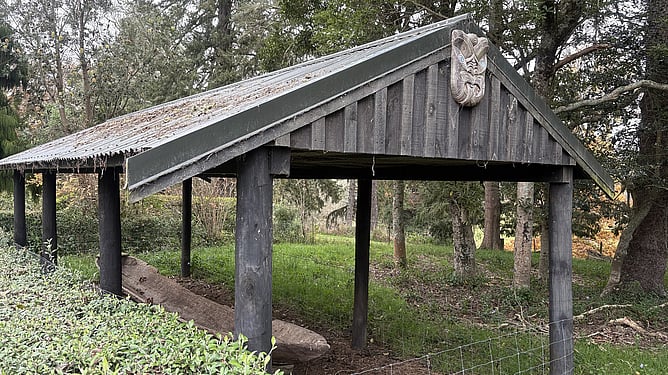
A community hīkoi connecting people with the history of the whenua, the work of the present, and the future of the Wainuioru catchment.
The Wairarapa Catchment Collective has seen the opportunity of catchment hīkoi to sites of significance as an important way to strengthen connections between people and places. The Collective has supported three catchment hikoi, hosted by Upper Waipoua Kaitiaki Group, Rangitūmau Catchment Group, and Wainuioru Community River Care Group.
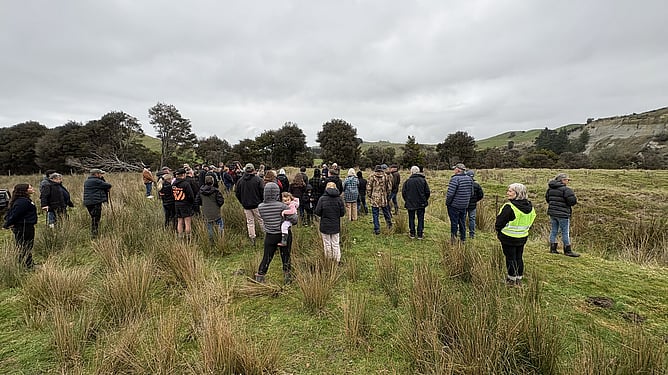
The most recent event was hosted by the Wainuioru Community River Care group and brought together around 70 people with connections to the area. Those attending included current and former landowners, as well as whānau from Ngāi Tūmapuhia A Rangi, Ngāti Hinepare and Rongomaiaia, all coming together to hear shared stories and reconnect with people and places.
The hīkoi was an opportunity to reflect on the long history of the Wainuioru Catchment. At Rautāhanga and Hikuwai, the pā sites spoke to early Māori settlement in the catchment dating back to the 1200s. It was a reminder of how long people have lived in this area. At the naming place of Wainuioru, participants learned about the springs and the paru that shape the identity of the area and give meaning to its name.
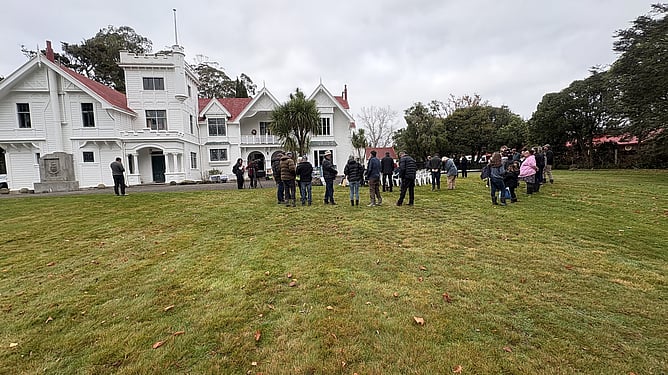
At Brancepeth Station, and through the story of the Beetham whānau settlement, the history of Pākehā settlement in the 1800s was explored. Brancepeth Station was one of the first farms developed in the Wairarapa and at its peak expanded to over 50,000 acres and 300 staff. The Beethem whānau have played a huge role in the shaping of the present community in Wainuioru.
At Birthday Hill we heard about the ongoing care for the whenua from current landowners both on farm and through the catchment group. We also heard about the naming of Brocken Hill, a German word that describes natural phenomena that is likened to wraiths/spirits seen in various forms of lighted cloud and mist. There was a great intergenerational connection to the pass between Te Maipi e Waru and the Brocken, a route used for generations, from Tūmapuhia a Rangi whānau through to farming families to connect with the coast.
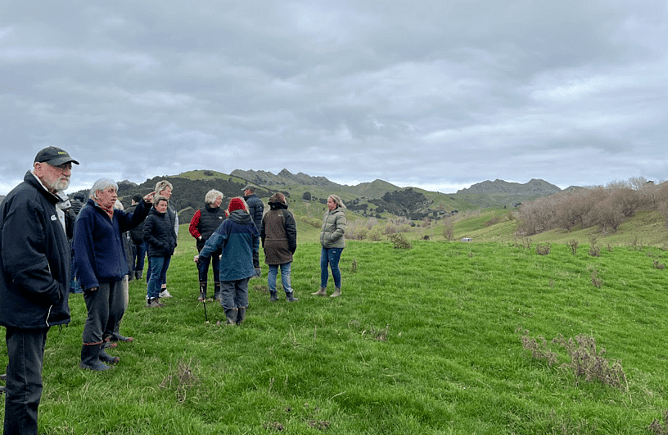
Alongside these stories of the past was a strong sense of the present: the current mahi of the catchment group and the ongoing role of the community in caring for this place. Although the hīkoi aim to explore the history of a place, they also create space to strengthen relationships across a catchment and help shape the shared work that is needed now and into the future.
One of the organisers reflected on the day through the whakataukī, Whatungarongaro te tangata, toitū te whenua (As people disappear from sight, the land remains). It was a fitting sentiment for a hīkoi that honoured those who have shaped Wainuioru across generations, while strengthening the connections of those who continue to carry its stories, responsibilities and future.