When a landscape holds both fragile native biodiversity and a strong, committed rural community, the real magic happens when everyone pitches in together. That’s exactly the story unfolding in the Homewood catchment, where partnerships are turning solid plans into measurable action on the ground.
The Homewood Sustainability Action Group began by looking closely at the eastern coastal strip - containing 208 hectares of land within the Greater Wellington Key Native Ecosystem (KNE) programme that conducts pest animal control. Monitoring work in 2023 revealed cats, possums, hedgehogs and hares were present. Rather than duplicating effort, the group set out to complement the existing KNE network by identifying the unprotected sections and designing a plan to connect the dots.
That simple idea - fill the gaps - has since grown into a coordinated coastal pest control corridor stretching from Riversdale Beach to Homewood. The group refined their plan this year and secured 90 traps to begin building those missing links with support from Greater Wellington’s KNE programme, including $5,000 towards trap deployment. By choosing to work with the same contractor who services the KNE traps, the group ensures consistent quality, lower travel costs, and a seamless network of predator control across both private and public land.
Just as importantly, the group is investing their own resources to pay for ongoing servicing. They know that long-term trap clearing and maintenance - not just installation - is what keeps a trap network effective. Regular servicing ensures every trap stays active, safe, and able to perform well year-round, giving native species the best possible reprieve from pest animal pressure.
On the western side of the catchment, a different story is emerging. Here, large stands of native and exotic forest present another set of challenges. Concerns about possums damaging soil conservation plantings and regenerating bush prompted the group to expand their monitoring footprint with support from the Wairarapa Catchment Collective. A baseline survey completed in October is now being processed, and the results will guide the next phase of action planning in early 2026
Through all of this, one message rings clear: no single organisation can do this alone. The project is powered by a shared commitment - Greater Wellington with its mission to protect key native ecosystems, the Wairarapa Catchment Collective with expertise, coordination and support, and the catchment group bringing local knowledge, effort on-the-ground, and long-term stewardship.
Together, they’ve built not just a line of traps, but a living example of how partnerships create action - connecting people, connecting habitats, and strengthening the resilience of a unique coastal environment.
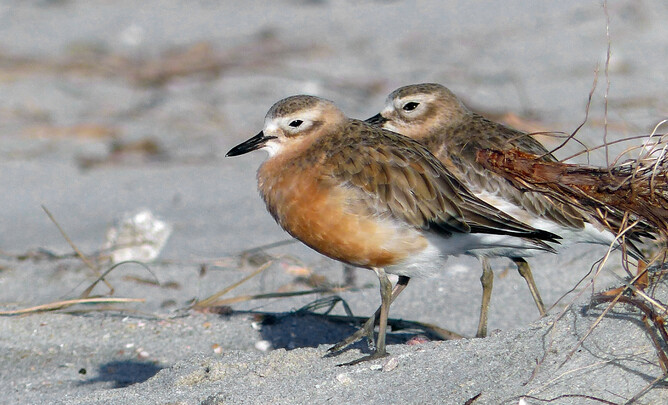
Banded dotterels are one of the threatended species protected through the joint trapping project.
Author: John Hart, Partnership Lead. Originally published in the Wairarapa Times Age on 27 November 2026/